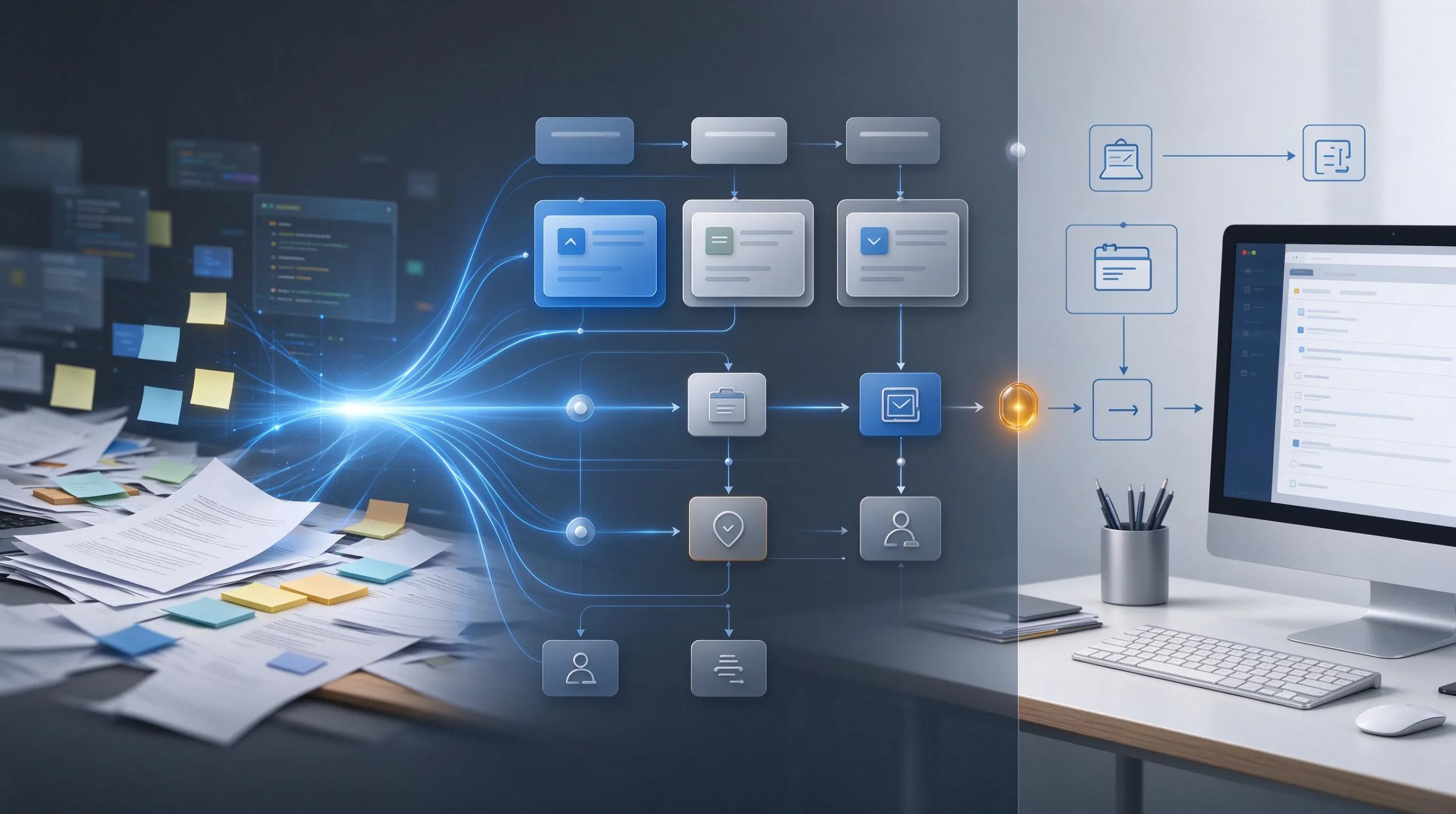
Evaluating a model on very large context windows is one of the easiest places to fool yourself. A single correctly retrieved fact placed near the beginning of a long prompt can create the impression that the system “handles a million tokens.” Real workflows are messier: relevant details sit in the middle or the end, instructions compete with one another, and the cost and latency of moving that much text become first-class constraints. This article describes the evaluation approach I use when I need to know whether Muse Spark (or any model) can actually support a high-token workflow rather than merely survive a demo.
Exact token limits, pricing, and performance characteristics must be verified against current official documentation; they change. The method itself is what travels.

Designing a Test That Matches the Real Workflow
Defining the workflow in concrete terms
Start by writing down the actual job the large context is supposed to enable. Examples: “Given a 200-page packet of contracts and amendments, answer five specific questions with source anchors,” or “Given a full repository snapshot and a bug report, locate the most likely cause and propose a minimal patch.” Vague goals such as “handle long documents” produce vague, non-reproducible tests. Concrete goals produce measurable outcomes.
Building a representative document or code packet
Construct or select a packet whose length and structure approximate the real workload. Include the kinds of distractors, repeated boilerplate, and cross-references that appear in production material. Artificially clean packets systematically over-estimate performance. If the real workflow involves multiple files or sections, preserve that structure rather than concatenating everything into one undifferentiated blob.
Placing critical information in multiple locations
Deliberately locate the facts or constraints the model must use at the beginning, in the middle, near the end, and in positions that require cross-referencing non-adjacent sections. A test that only probes the beginning of the context is not a long-context test; it is a short-context test with extra padding. Record the exact location of every probe item so that later analysis can distinguish “the model used the information” from “the model guessed correctly.”
Writing scoring criteria before running any trial
Decide in advance what counts as a correct answer, a partially correct answer, and a failure. Include explicit penalties for invented details, dropped qualifiers, and silent contradictions. Pre-committed scoring rules prevent the common post-hoc adjustment that turns a mediocre run into an “encouraging” one.
Measuring Accuracy Without Wishful Interpretation
Requiring source anchors for every material claim
Instruct the model to pair each answer with the shortest supporting excerpt and its approximate location. Score both the correctness of the answer and the correctness of the anchor. An answer that is right for the wrong reason, or that cannot be traced, is scored lower than one that is both correct and grounded. This single requirement eliminates a large class of plausible-sounding but untraceable responses.
Tracking silence and contradiction handling
Include questions the packet does not answer and sections that deliberately conflict. Credit the model for marking silence and for surfacing conflicts rather than resolving them into a single smooth statement. Models that fill gaps or paper over contradictions look better on naïve accuracy metrics and worse on decision-support metrics. Choose the metric that matches the real cost of error.
Separating retrieval failures from reasoning failures
When an answer is wrong, determine whether the relevant information was never surfaced or whether it was surfaced and then misused. The two failure modes imply different mitigations: better placement or chunking strategies versus clearer instructions or additional verification steps. Conflating them produces mis-directed effort.
Running enough trials to see variance
A single successful run is not evidence. Execute the same packet and question set multiple times, ideally across different sessions or days. Record the distribution of outcomes, not only the best or the average. High variance is itself a finding; a workflow that works two times out of five is not yet reliable enough for unsupervised use.
Tracking Latency, Cost, and Operational Reality
Measuring end-to-end wall-clock time
Record the time from request dispatch to completed response for every trial. Large-context calls can be slow enough that latency becomes a usability constraint even when accuracy is acceptable. Note whether streaming is available and, if so, time-to-first-token as well as total completion time. Interactive workflows care about both.
Calculating effective cost per successful outcome
Use the token counts reported by the API (or careful estimates if counts are unavailable) and the published pricing to compute cost per trial. Then compute cost per successful trial by including failures and retries. A cheaper model that requires more retries or more human cleanup can be more expensive in total than a higher-priced model that succeeds more often on the first attempt.
Observing behavior near context limits
If the workflow approaches the practical context limit, test explicitly at that boundary. Performance often degrades before the hard limit is reached. Knowing where the soft degradation begins is more useful than knowing the advertised maximum.
Logging enough to reproduce any single trial
Preserve the exact prompt (or a hash and the generation script), the model identifier, the timestamp, the token counts, the latency, and the full response. Without that record, an anomalous result cannot be diagnosed and a good result cannot be trusted.
Common Ways Evaluations Fool Their Authors
Testing only “needles” placed at the beginning
The classic needle-in-a-haystack test with the needle at position zero mainly measures whether the model can read the prompt at all. Move the needle. Multiple needles at varied positions give a more honest picture.
Allowing the model to use outside knowledge
If the packet is drawn from public material, the model may answer from training data rather than from the supplied context. Construct packets that contain unique identifiers, synthetic figures, or deliberately altered facts so that correct answers must come from the provided text. Otherwise you are not measuring context utilization.
Ignoring the human verification step
An evaluation that stops at model output over-states readiness for production. Include the time and error rate of the human review that would actually be required. A workflow that produces a plausible brief in 40 seconds and then needs 15 minutes of careful checking is not yet a 40-second workflow.
Reporting only best-case or average-case numbers
Publish the distribution. Tail latency, worst-case accuracy, and the frequency of silent failures are the numbers that determine whether a workflow can be trusted when the stakes are non-zero.
Turning Evaluation Results into Decisions
Setting explicit go / no-go thresholds
Before the first run, decide what accuracy, latency, and cost figures would make the workflow worth adopting. After the runs, compare the observed distribution against those thresholds. Pre-committed thresholds reduce the temptation to lower the bar after seeing mediocre data.
Identifying the highest-leverage improvement
If accuracy is the bottleneck, experiment with placement, instruction restatement, or smaller focused contexts. If latency or cost is the bottleneck, experiment with summarization stages, caching of stable prefix material, or alternative models for sub-tasks. The evaluation data should point to the next experiment, not merely produce a ranking.
Re-running after any material change
Model updates, prompt changes, packet structure changes, and even client-library changes can alter results. Keep the evaluation packet and scoring rubric stable and re-run when something upstream moves. A workflow that passed three months ago has not been proven to pass today.
Documenting the limits alongside the successes
The most useful evaluation report states both what worked and what still fails. Limits are not an embarrassment; they are the information that prevents the next person from rediscovering the same failures in production.
Honest long-context evaluation is slower and less flattering than a polished demo. It is also the only way to know whether a high-token workflow can be relied upon. Design the test to match the real job, place critical information in multiple locations, require source anchors, measure cost and latency, and pre-commit to scoring rules and thresholds. When the results are good under those conditions, you have evidence. When they are not, you have avoided a more expensive discovery later. The clean-run standard applies to the evaluation itself: if the test cannot be repeated by someone else with the same packet and the same rubric, it is not yet finished.